Uncategorized

Uncategorized

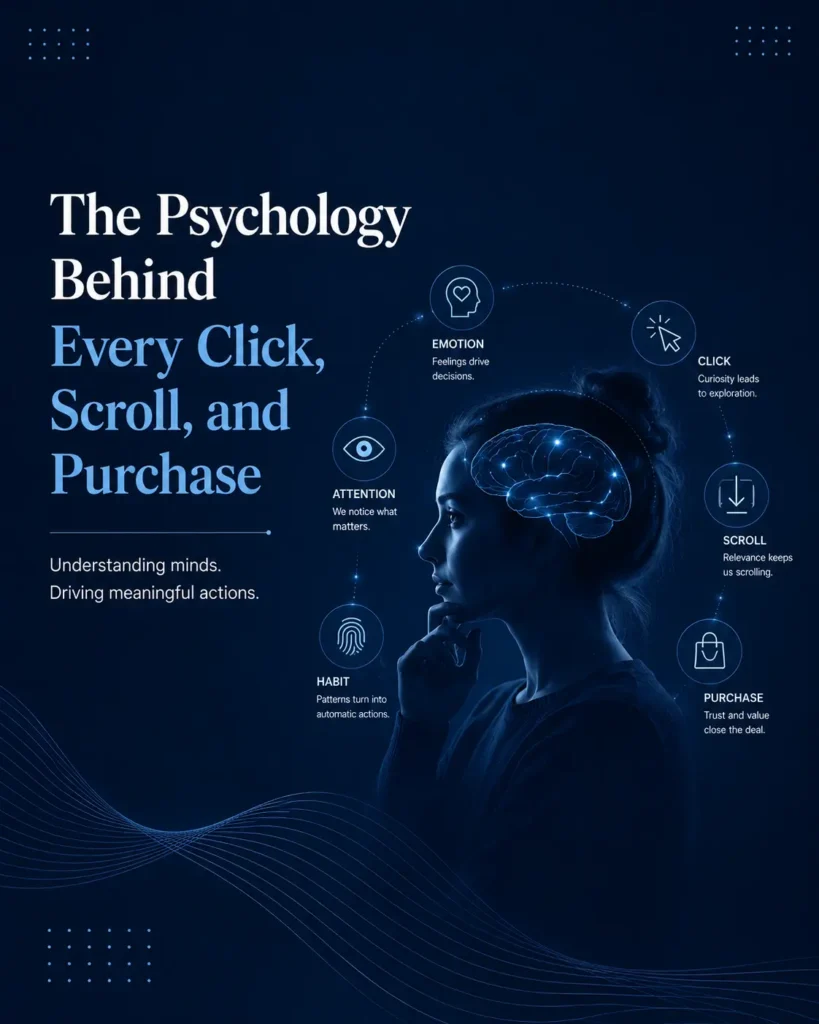
The Psychology Behind Every Click, Scroll, and Purchase

Every day, billions of people interact with digital platforms without realizing how much psychology influences their decisions. From clicking an advertisement to scrolling through social media or completing an online purchase, each action is shaped by emotions, curiosity, trust, and habit. Behind every successful digital campaign is a deep understanding of how people think, what captures their attention, and what motivates them to take action. In today’s fast-paced digital world, businesses have only a few seconds to make a strong first impression. A visually appealing website, engaging content, and clear messaging can instantly capture a visitor’s interest. Once that attention is gained, user-friendly design, compelling visuals, and personalized experiences encourage people to continue exploring rather than leaving the page. Purchasing decisions are rarely based on logic alone. Customers are more likely to buy from brands they trust and connect with emotionally. Positive reviews, authentic storytelling, limited-time offers, and personalized product recommendations help reduce uncertainty and build confidence. These psychological triggers create a smoother customer journey, making users feel comfortable with their decisions instead of pressured into making them. Understanding consumer psychology allows marketers to create meaningful digital experiences rather than simply promoting products. When businesses focus on solving problems, delivering value, and building genuine relationships, they create loyal customers instead of one-time buyers. In a world where attention is the most valuable resource, success belongs to brands that understand not just what people do online, but why they do it.

Uncategorized

Building a Strong Brand Through Digital Marketing

In today’s competitive digital landscape, building a strong brand is about much more than having a great logo or an attractive website. A successful brand creates trust, delivers value, and builds meaningful relationships with its audience. Digital marketing has become one of the most effective ways for businesses to establish that connection and stand out in a crowded marketplace. Every interaction a customer has with your business—whether it’s through your website, social media, email, or online advertisements—shapes their perception of your brand. This is why consistency is essential. Using the same visual identity, tone of voice, and messaging across all platforms helps create a recognizable and trustworthy brand image that customers can easily remember. Content also plays a significant role in brand building. Instead of focusing only on promoting products or services, businesses should create content that educates, informs, or solves problems for their audience. Blog posts, videos, social media updates, newsletters, and informative guides not only provide value but also position your brand as a reliable source of information. When customers find your content helpful, they are more likely to return and recommend your brand to others. Engaging with your audience is equally important. Responding to comments, answering questions, and encouraging conversations helps build stronger relationships and shows customers that your brand genuinely values them. Personal interactions create loyalty, increase customer satisfaction, and encourage long-term engagement. Another important aspect of digital branding is monitoring your performance. Analytics tools help businesses understand customer behavior, measure campaign success, and identify opportunities for improvement. By using this data, brands can refine their strategies and deliver more personalized experiences to their audience. A strong brand isn’t built overnight—it grows through consistency, authenticity, and meaningful customer experiences. By using digital marketing strategically, businesses can increase brand awareness, strengthen customer trust, and create lasting relationships that support long-term growth. In an ever-evolving digital world, investing in your brand today is one of the smartest decisions you can make for future success.

Uncategorized

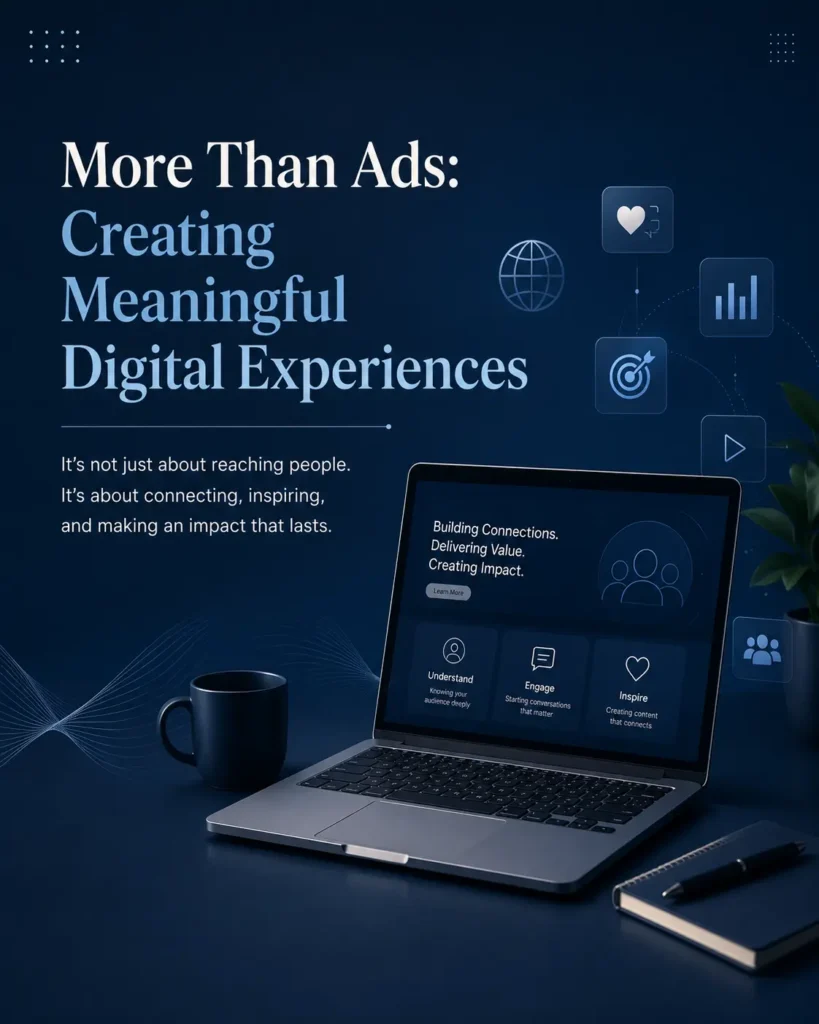
More Than Ads: Creating Meaningful Digital Experiences

In today’s digital world, people are surrounded by advertisements everywhere they go. From social media feeds and websites to videos and search engines, brands are constantly competing for attention. As a result, consumers have become skilled at scrolling past, skipping, or ignoring traditional advertising. This is why successful digital marketing today is about much more than simply showing ads—it is about creating meaningful digital experiences. A meaningful digital experience is any interaction that leaves the audience feeling informed, understood, or valued. Instead of focusing only on selling a product, modern brands focus on building relationships. When customers feel connected to a brand, they are more likely to trust it, engage with it, and return in the future. The first step in creating meaningful experiences is understanding the audience. Every customer has different needs, interests, and challenges. By listening to feedback, analyzing behavior, and understanding what people truly care about, brands can create content and experiences that feel relevant rather than generic. Content plays a major role in this process. Helpful blog posts, educational videos, social media tips, and real customer stories provide value even before a purchase is made. People appreciate brands that teach them something, solve a problem, or inspire them. This type of content builds trust naturally and keeps audiences engaged over time. User experience is equally important. A beautiful advertisement can attract visitors, but a slow website, confusing navigation, or poor mobile experience can quickly drive them away. Fast loading speeds, clear design, and easy access to information make customers feel comfortable and confident while interacting with a brand. Personalization also helps create stronger connections. Receiving recommendations that match personal interests or content that feels tailored to individual needs makes users feel recognized rather than treated as just another number. When used thoughtfully, data and technology can help brands deliver more relevant experiences. Most importantly, meaningful digital experiences are built on authenticity. People connect with brands that communicate honestly, show their values, and engage in genuine conversations. In a world full of promotional messages, authenticity stands out. Digital marketing is no longer just about getting clicks or impressions. It is about creating moments that people remember. Every website visit, social media interaction, email, or piece of content is an opportunity to build trust and strengthen a relationship. The brands that succeed in the future will be the ones that focus not only on reaching audiences, but on creating experiences that truly matter. Because at the end of the day, people may forget an advertisement, but they rarely forget a positive experience.

Scroll to Top